
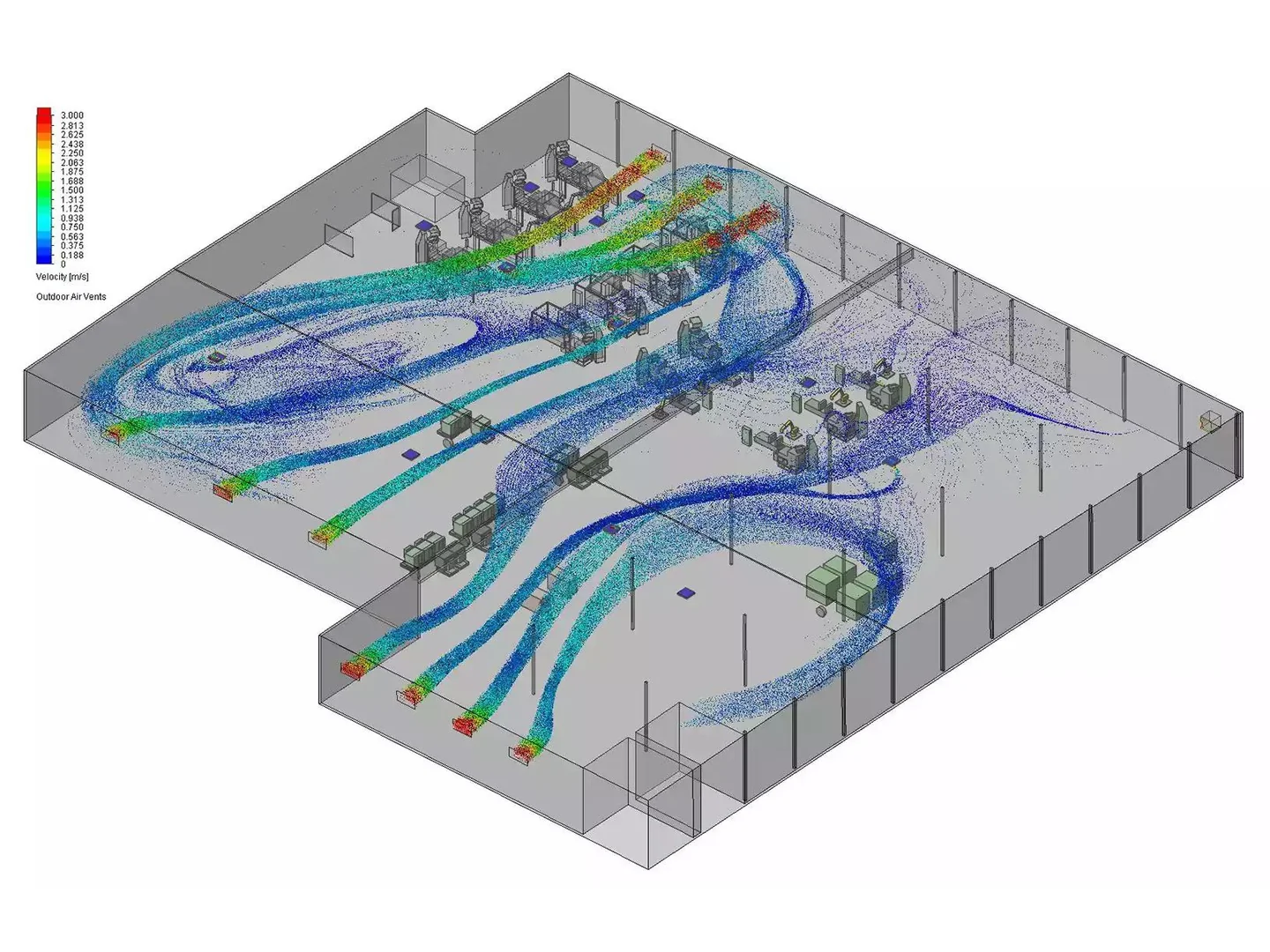
Manufacturing has always been driven by the pursuit of better performance, higher productivity, lower energy consumption, improved quality, greater reliability, and reduced operating costs. Traditionally, achieving these goals has often depended on physical prototypes, plant trials, engineering experience, and repeated design iterations. Today, Computational Fluid Dynamics (CFD) is changing that approach. CFD enables manufacturers to create a virtual representation of fluid flow, heat transfer, pressure, mixing, combustion, and other physical phenomena before making physical changes to equipment or processes. Instead of asking “What will happen if we change the design?”, engineers can simulate the answer first. This shift from physical experimentation to physics-based digital engineering is transforming how modern manufacturing facilities design, troubleshoot, optimize, and scale their processes.
What Is CFD?
Computational Fluid Dynamics (CFD) is a numerical simulation technology used to analyze how fluids behave and interact with equipment, materials, and processes. Depending on the application, CFD can simulate fluid flow and velocity distribution, pressure drop, heat transfer, temperature distribution, turbulence, mixing and residence time, multiphase flow, combustion, particle transport, gas-solid interactions, chemical species transport, ventilation, cooling, and heating systems. For manufacturers, this provides a way to investigate complex physical behavior virtually, often before expensive equipment modifications, prototypes, or plant trials are undertaken.
Design Better Equipment Before Building It
One of the biggest advantages of CFD is its ability to evaluate equipment designs during the engineering stage. Consider a reactor, heat exchanger, mixing vessel, burner, cyclone, duct, pump system, or cooling enclosure. A conventional development approach may follow the cycle Design → Fabricate → Test → Identify Problems → Modify → Fabricate Again, with each iteration consuming time, resources, and capital.
CFD can transform this workflow into Design → Simulate → Optimize → Manufacture. Engineers can evaluate multiple design configurations virtually and identify potential issues before committing to fabrication. CFD can reveal recirculation zones, poor mixing, excessive pressure loss, dead zones, high-temperature regions, low heat-transfer areas, uneven velocity distribution, flow separation, and localized wear. The result is a more informed engineering decision before physical resources are committed.
Optimize Manufacturing Processes
CFD is not limited to equipment design; it can also provide valuable insight into the manufacturing process itself. In chemical and process industries, for example, CFD can help answer critical questions: Is the reactor mixing effectively? Are there temperature gradients inside the vessel? Is the residence-time distribution appropriate? Is the feed distributed uniformly? Are there regions where reactions may be incomplete?
Instead of relying exclusively on plant measurements, engineers can visualize flow, temperature, concentration, and other physical phenomena inside equipment, even in locations where installing physical sensors may be impractical. This deeper visibility into the process can reveal hidden inefficiencies and create new opportunities for process optimization.
Reduce Energy Consumption
Energy efficiency is one of the most important priorities for modern manufacturing. Poor fluid distribution, excessive pressure drop, inefficient heat transfer, and non-uniform combustion can all contribute to unnecessary energy consumption. CFD allows engineers to investigate the physical causes behind these inefficiencies and evaluate potential improvements before implementing them in the plant.
Applications include air distribution, burner geometry, furnace airflow, cooling systems, heat exchanger configurations, pump and piping systems, ventilation systems, and compressor flow paths.
Instead of simply asking, “How much energy is the equipment consuming?”, CFD enables engineers to investigate the more valuable question: “Why is the equipment consuming this much energy, and where can the physical losses be reduced?”
Improve Product and Process Quality
Manufacturing quality is often closely linked to physical conditions within the process. Temperature, concentration, mixing, cooling rate, drying conditions, and residence time can all influence final product characteristics. CFD can identify process non-uniformities that may otherwise appear only as variations in product quality.
For example, a thermal process may contain regions that are significantly hotter than others; a mixing vessel may contain poorly mixed zones; or a cooling system may contain areas where heat removal is inadequate. By understanding these spatial variations, engineers can modify equipment or operating conditions to create a more uniform process environment, contributing to more consistent product quality, improved process stability, and reduced quality variation.
Accelerate Troubleshooting
CFD is also a powerful tool for investigating existing plant problems. Manufacturing facilities frequently encounter unexpected pressure drops, equipment overheating, poor combustion, uneven product quality, excessive energy consumption, inadequate cooling, poor ventilation, fouling, and flow instability. Plant measurements can tell engineers what is happening, but CFD can help investigate why it is happening.
A validated CFD model can serve as a virtual troubleshooting environment in which engineers investigate flow behavior, identify physical causes, and evaluate potential solutions without immediately modifying physical equipment. This can reduce troubleshooting time and help engineers make decisions based on a deeper understanding of the underlying physics.
Support Scale-Up
Scaling a process from laboratory or pilot scale to commercial production is one of the most challenging activities in manufacturing. Simply increasing equipment dimensions does not guarantee that the underlying physics will scale in the same way — flow patterns, turbulence, heat transfer, mixing, reaction behavior, and residence-time distribution can change significantly with scale.
CFD provides a mechanism for studying these effects before committing to full-scale equipment. A digital model can be developed at pilot scale, compared with experimental or plant data, validated, and then used to investigate larger-scale configurations, helping identify scale-dependent risks and increase confidence in the final commercial configuration.
Enable Digital Twins and Smart Manufacturing
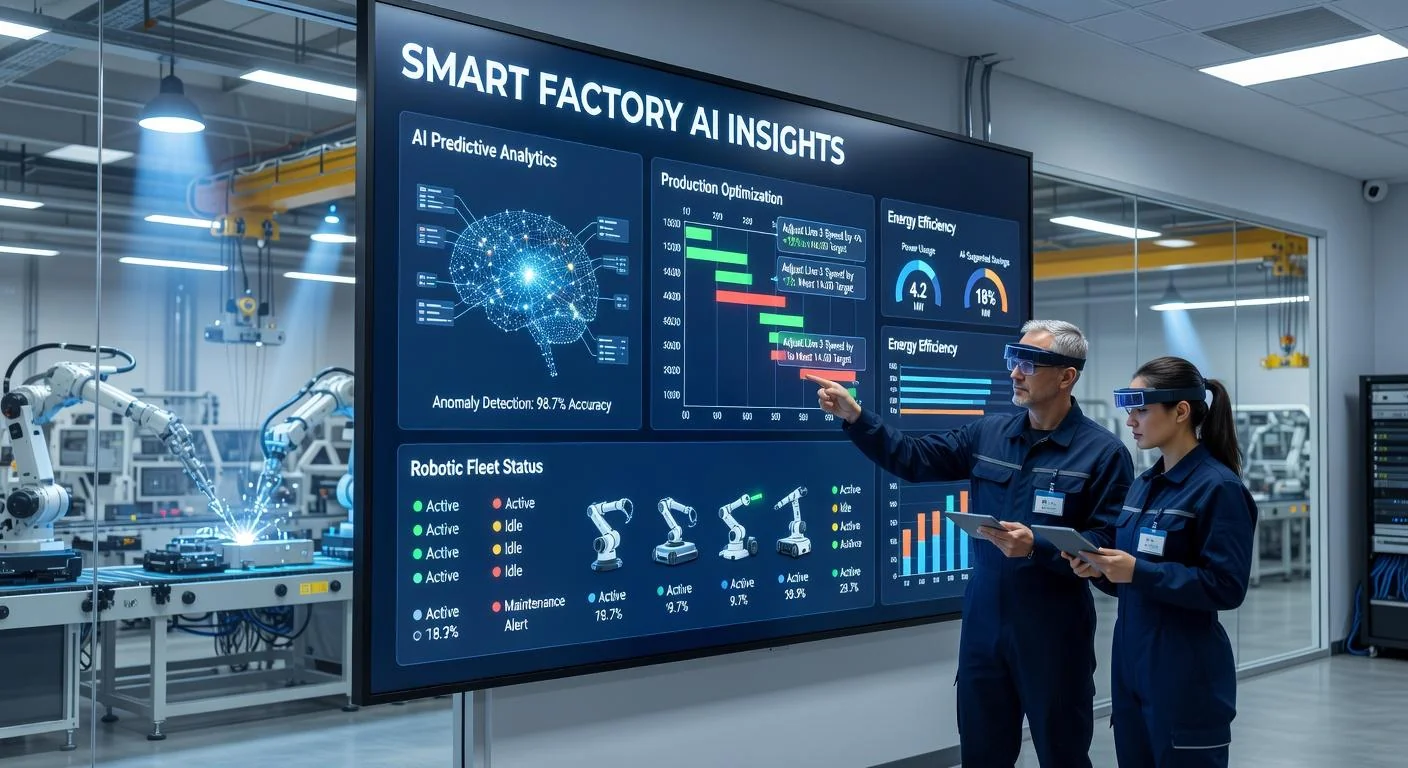
The future of CFD extends beyond standalone simulation studies. CFD can become an important component of a broader digital twin and smart manufacturing ecosystem by connecting physics-based models with real operating data.
Sensors → Industrial Data Platform → CFD/Physics Model → AI Analytics → Prediction → Optimization → Plant
Sensors provide real-time information about equipment and process conditions. The data platform organizes and contextualizes that information. Physics-based models provide an understanding of how the system should behave, while AI and analytics identify patterns and deviations within actual operating data. Together, these technologies create a stronger connection between the physical plant and its digital representation.
CFD + AI: The Next Engineering Revolution
Traditional CFD simulations can be computationally expensive, particularly for complex geometries, transient simulations, and multiphysics problems. Artificial intelligence is opening new possibilities for accelerating this engineering workflow. Machine-learning models can be trained using simulation, experimental, and plant data to develop fast surrogate models that approximate system behavior within defined operating ranges.
The combination of CFD and AI creates opportunities for AI-assisted design optimization, rapid process prediction, automated parameter optimization, and physics-informed machine learning. AI does not replace physics; it extends the practical reach of physics-based engineering by making complex analysis faster and more scalable.
The Business Impact of CFD
CFD is ultimately not about producing colorful simulation contours — it is about making better engineering and manufacturing decisions. When applied correctly and supported by appropriate validation, CFD can contribute to lower CAPEX by reducing unnecessary prototypes and design iterations, lower OPEX through improved energy efficiency, higher productivity by identifying bottlenecks, better quality through reduced process non-uniformity, faster development through virtual evaluation, lower technical risk, and improved sustainability.
The Future: Manufacturing Through a Digital Lens
Manufacturing is moving toward a world where physical assets increasingly have digital counterparts. CFD provides an important physics foundation for this transformation. The most successful organizations will not use CFD simply as a tool for generating simulation reports — they will integrate simulation into the broader engineering lifecycle, from conceptual design and equipment sizing to commissioning, troubleshooting, optimization, scale-up, and digital-twin development.
Build → Test → Modify becomes Model → Simulate → Optimize → Build → Validate → Continuously Improve
This approach allows engineering teams to test more ideas, understand complex physical behavior earlier, reduce technical uncertainty, and make better-informed decisions before changes reach the physical plant.
Engineering the Future
CFD gives manufacturers the ability to see inside processes that are otherwise difficult or impossible to observe. By combining computational physics with engineering expertise, plant data, and AI, manufacturers can transform complex physical processes into measurable, understandable, and increasingly optimizable digital systems.
The future of manufacturing will not be designed entirely on the shop floor. It will increasingly be engineered in the digital world first, then validated, implemented, and continuously improved in the physical world.